2027 Challenging Negative Thoughts CBT: A Practical Workbook for Mental Wellness and Productivity
Cognitive Behavioral Therapy (CBT) is one of the most evidence-based approaches for managing negative thinking patterns. The 2027 Challenging Negative Thoughts CBT workbook interior brings this method into a structured, ready-to-use format that supports both mental wellness and everyday productivity. Designed for adults who juggle professional demands, creative projects, or personal growth goals, this resource helps you identify, challenge, and reframe distorted thoughts without adding extra complexity to your routine. Whether you are a therapist, coach, content creator, or someone looking to improve your own mindset, this workbook offers a practical way to integrate CBT into your workflow.
Understanding the Workbook’s Structure and Purpose
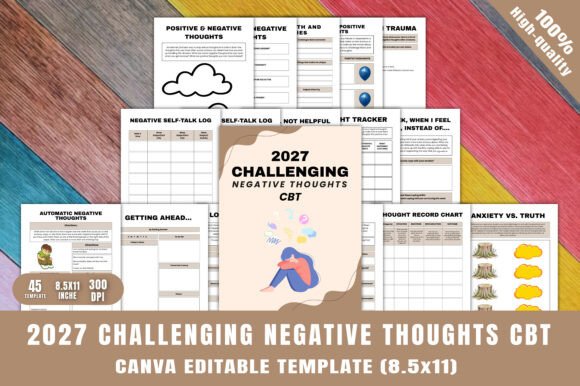
The 2027 Challenging Negative Thoughts CBT interior is a collection of 33 unique pages, including a full 2027 calendar and monthly planner from January to December. Beyond basic planning, the workbook focuses on specific CBT exercises such as the ANT (Automatic Negative Thoughts) identification, the “5 Steps to Untwisting Your Thinking,” and thought record charts. Each page is designed to move you from general awareness of negative patterns to actionable reframing.
The workbook is delivered as an editable Canva template, a print-ready PDF, and high-resolution JPG/PNG files. This makes it suitable for both personal use and commercial publishing, such as on Amazon KDP. The flexibility means you can adjust colors, fonts, and layouts to match your brand or personal preferences without starting from scratch.
At its core, the workbook serves as a structured self-reflection tool. It is not a replacement for therapy but a complement to professional guidance or a standalone practice for those familiar with CBT principles. The exercises guide users through identifying troubling thoughts, acting as a “detective” to evaluate evidence, replacing negative self-talk with positive alternatives, and tracking progress over the year.
Where the Workbook Fits Into Your Workflow
Integrating this workbook into your daily or weekly routine requires intentionality but minimal overhead. Here are three common scenarios where it fits naturally:
Before a High-Stakes Task or Decision
If you are about to pitch a project, start a creative endeavor, or make a significant business decision, anxiety and negative predictions often surface. The workbook’s “Identify Your Automatic or Troubling Thought” page can be used as a pre-task check-in. Spend five minutes writing down the thought that is causing hesitation, then apply the “Be a Detective” section to examine the evidence. This process reduces cognitive load and helps you approach the task with a clearer, more balanced perspective.
During Regular Planning Sessions
The monthly planner and “This Week, When I Feel Anxious, Instead Of…” pages lend themselves to weekly reviews. Many professionals block out time on Sunday or Monday for planning. Adding a five-minute CBT exercise to this block transforms it from a purely logistical task into a holistic preparation session. For example, after scheduling your week, open the “Thought Tracker” page and note any recurring negative patterns you anticipate. This allows you to proactively prepare reframes before the stress hits.
After a Setback or Disappointment
When a project falls through, a client rejects a proposal, or a creative piece receives poor feedback, the workbook provides a structured debrief. The “Coping with Trauma” and “Negative vs. Positive Thoughts” pages help you differentiate between a temporary setback and a distorted global conclusion. Instead of spiraling, you work through the exercise, logging what happened, how you initially reacted, and a more balanced alternative. Over time, this retrains your brain to default to realistic appraisals rather than catastrophic ones.
Practical Implementation Tips for Creators and Professionals
Because the workbook is customizable, you can tailor it to your specific workflow. Here are actionable ways to integrate it without disrupting your existing systems:
- Use the Canva template to align with your brand – If you are a coach or content creator selling this workbook, customizing the colors and fonts to match your visual identity takes under thirty minutes. The link in the purchase ensures you can edit directly, then export in your preferred format for print or digital distribution.
- Pair it with a digital note-taking app – Many professionals keep a daily journal in Notion, Roam, or OneNote. You can replicate the “Positive Self-Talk Log” or “Helpful vs. Not Helpful” exercise in your existing system. The workbook serves as the structural blueprint; you then embed the practice into your digital workflow.
- Allocate a specific time slot – Consistency matters more than duration. A five-minute morning routine using the “Automatic Negative Thoughts” page can be more effective than a thirty-minute session once a week. Set a recurring calendar reminder labeled “Thought Check” and keep the workbook (or a printed copy) nearby.
- Integrate with a physical planner – If you already use a paper planner, the 2027 calendar and monthly pages can replace or supplement your existing monthly spread. The workbook’s calendar is clean and unobtrusive, allowing you to overlay your task lists and appointments while keeping the CBT exercises interleaved.
Long-Term Integration for Sustainable Mental Wellness
A workbook like this is not a one-time fix but a tool for building a habit. The “My Strengths and Qualities” and “Positive Thought Today” pages encourage daily reinforcement, which compounds over months. For entrepreneurs and freelancers who face fluctuating income or rejection, having a structured method to challenge thoughts like “I always fail” or “This will never work” is essential for maintaining motivation.
The 2027 date range is also strategic. Because it covers a full year, you can use the workbook as a longitudinal self-study. At the end of each quarter, review your “Thought Record Chart” and “Negative Self-Talk Log” to identify patterns. Are you more prone to negative thinking during certain months or after specific types of tasks? This data informs how you schedule high-risk activities and where to reinforce positive self-talk.
For those publishing the workbook on KDP or selling it as a digital product, the value lies in its usability. Buyers are looking for something that works immediately, not a theoretical guide. The printable PDF and editable templates reduce friction. A fitness coach, for example, could bundle this workbook with a goal-setting course, giving clients a mental wellness practice that complements their physical training. A life coach might use it as a handout during coaching sessions, then assign specific pages as homework.
Compatibility and Quality Control Considerations
When using the Canva template, check that your edits do not disrupt the original margins or bleed areas if you intend to print. The provided print-ready PDF is already formatted, so if you plan to sell as-is, you can skip editing entirely. For digital use, the high-resolution PNG and JPG files work well in apps like GoodNotes or Notability, where users can write directly with an Apple Pencil or stylus.
If you are a creator selling this interior, consider offering a sample pack of three pages so potential buyers can test the usability before purchasing. This builds trust and aligns with E-E-A-T principles by demonstrating transparency. Additionally, include a brief usage guide in your product description or as a bonus file, explaining how to best integrate the exercises into a daily routine.
Making the Workbook Part of Your Ongoing Practice
The 2027 Challenging Negative Thoughts CBT workbook interior is more than a collection of worksheets; it is a system for rewiring thought patterns over time. By embedding it into your existing planning routines, you turn self-reflection from an occasional activity into a consistent practice. The exercises are grounded in proven CBT methods, and the customizable format ensures they fit your personal style or brand.
Whether you use it for yourself before a difficult conversation, during a weekly review, or after a project setback, the workbook provides a clear path from automatic negativity to balanced thinking. For professionals and creators who need to stay productive while managing their mental health, this resource offers a practical, low-friction solution that pays dividends across the whole year.