Executive Function Skills Workbook for Kids
You watch your child stare at a blank page. They know the answers, but getting them out feels impossible. The backpack is chaotic. Simple homework drags on for hours. Small changes to the daily routine can trigger big reactions. If this sounds familiar, you are not alone. These challenges often point to underdeveloped executive function skills—the mental processes that help us plan, focus, remember instructions, and manage emotions. The right tools can make a real difference. An Executive Function Skills Workbook translates these complex cognitive abilities into a tangible, approachable format that meets children exactly where they are.
More Than a Planner: How This Workbook Builds Cognitive Muscles
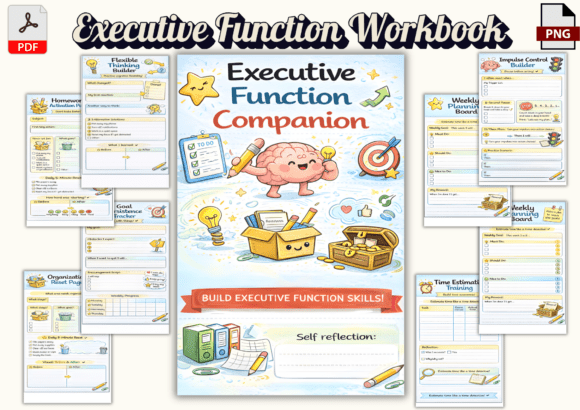
A standard planner helps you list tasks. This workbook goes several steps deeper by targeting the underlying skills needed to actually complete those tasks. It is a complete toolkit, spanning 17 pages of activities designed to strengthen focus, organization, impulse control, working memory, and time management. The format itself is intentionally flexible. The 6x9 inch size works well for small hands or a therapy bag, and the included PDF and PNG files give you the freedom to print pages as needed or load the entire resource into a digital app like GoodNotes or Notability. This adaptability means a parent, teacher, or therapist can use the same pages in completely different environments, tailoring the experience to the child’s daily needs.
Who Is This Designed For? Addressing Real Needs Across Home, School, and Therapy
This resource was created with a wide range of learners in mind, but it is especially valuable for those who need extra support in specific areas.
- For neurodivergent learners and ADHD support: Many of the activities are built around short bursts of focus and visual cues. The Focus Booster Plan helps a child with ADHD break a 30-minute reading assignment into manageable chunks. The Impulse Control Builder provides a concrete pause-and-reflect moment before reacting.
- For homeschool families: Structured yet flexible, the Weekly Planning Board brings predictability to the school week. The Task Breakdown Planner turns a large science project into a clear, step-by-step roadmap, teaching project management skills early.
- For teachers and tutors: The Homework Activation Page is an excellent classroom tool for transitioning students into independent work mode. The Flexible Thinking Builder encourages students to see problems from different angles, a skill that benefits group projects and critical thinking.
- For therapists (Occupational Therapy, CBT, etc.): The Self-Assessment Page offers a non-threatening way to set session goals. The Emotional Regulation Map is a powerful conversation starter, helping children identify feelings and choose calming strategies in real time.
- For parents navigating daily struggles: The Organization Reset Page turns the dreaded chore of cleaning a room or backpack into a shared, structured activity. The Goal Persistence Tracker helps build resilience over weeks, not just days.
Where Do You Start? A Practical Guide to the Core Pages
The workbook begins with a kid-friendly explanation of what executive functioning actually is. From there, it moves directly into self-reflection, helping the child identify their own strengths and challenges. This sets the stage for the hands-on tools that follow.
Several pages stand out for their practical design. The Task Breakdown Planner teaches the habit of chunking. Instead of writing down a vague task like “study for math,” the child lists smaller steps like “review flashcards,” “complete practice quiz,” and “check answers.” This alone can reduce homework anxiety dramatically. The Time Estimation Training page works alongside this, directly addressing the time blindness that affects many students. By guessing how long a task will take and then comparing it to the actual time, children build a more accurate internal clock.
Perhaps one of the most valuable tools is the Emotional Regulation Map. Rather than simply saying “calm down,” this page invites the child to identify the specific feeling, rate its intensity, and pick a pre-planned strategy to return to a balanced state. This turns an overwhelming emotional experience into a solvable puzzle. Finally, the Executive Function Growth Tracker provides a visual dashboard of progress, focusing on consistency and improvement rather than perfection.
Tips for Success: Making the Most of the 17 Pages
Getting the most out of this resource requires a thoughtful approach. Here are a few practical considerations to keep in mind.
- Start with the self-assessment. Let the child’s own answers guide your focus. If they rate their organization skills low but their impulse control high, start with the Organization Reset Page. Meeting them where they are builds trust and momentum.
- Prioritize consistency over intensity. Using the Weekly Planning Board for ten minutes each morning is far more effective than trying to complete the entire workbook in a single weekend. Executive function skills are built through repetition and routine.
- Choose your format wisely. The 6x9 size is print-friendly and ideal for binding into a physical book (perfect for creators looking at KDP interiors). For on-the-go use, loading the PDF into a tablet app like GoodNotes allows for easy editing, erasing, and reuse without wasting paper.
- Make it a conversation tool. The real growth happens when you talk through the activities. Ask open-ended questions like, “What made you choose that strategy on the Impulse Control Builder?” or “How did it feel when you stuck with your goal on the tracker?”
- Adapt the difficulty to the child. A 7-year-old might draw pictures in the working memory builder, while a 14-year-old can write detailed reflections. The structure is there, but the depth can flex with the child’s age and development.
Building Lifelong Skills, One Page at a Time
An Executive Function Skills Workbook is more than a collection of printable pages. It is an investment in a child’s confidence and independence. By providing a safe, structured space to practice planning, emotional regulation, and flexible thinking, you are equipping them with tools that extend far beyond the classroom. Whether you are a parent navigating the challenges of ADHD, an educator looking for better classroom resources, a therapist seeking engaging session tools, or a creator developing a high-value digital product, this workbook offers a clear, compassionate path forward. The goal is not to fix a child, but to empower them with the skills to navigate their world more effectively.