Why Every Young Explorer Needs a Kids’ Travel Journal
Family travel is one of the most enriching experiences you can share with your children. But let’s be honest—kids experience trips differently than adults do. They notice the tiny details we overlook, ask questions we never thought to ask, and form memories that often blur together by the time you reach the airport home. That is exactly where a Kids’ Travel Journal steps in. More than just a notebook, this thoughtfully designed travel planner empowers children to take ownership of their adventures, turning every journey into a personal narrative they can revisit for years to come.
The Purpose Behind a Travel Journal Designed for Kids
Travel creates memories, but without a way to capture them, those memories can fade. A Kids’ Travel Journal serves as both a record keeper and a creative outlet. It bridges the gap between experiencing a moment and reflecting on it. The journal is not about perfect handwriting or flawless spelling. It is about giving children a structured yet flexible space to document what matters most to them.
Think about how often children ask to tell stories about past trips. With a dedicated journal, those stories become anchored in real details—what the weather was like, which meal was their favorite, or how they felt when they saw the ocean for the first time. The journal transforms passive sightseeing into active engagement. Kids become participants in their own travel story rather than just passengers along for the ride.
Core Features That Make This Journal Stand Out
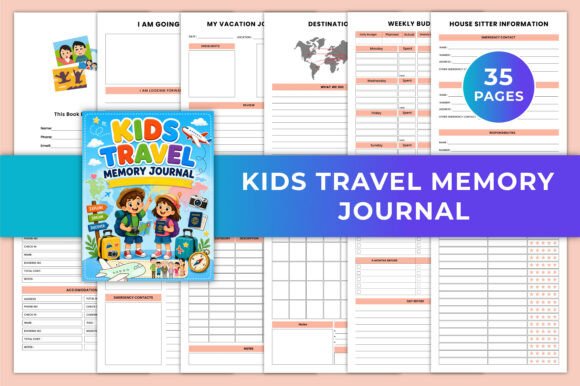
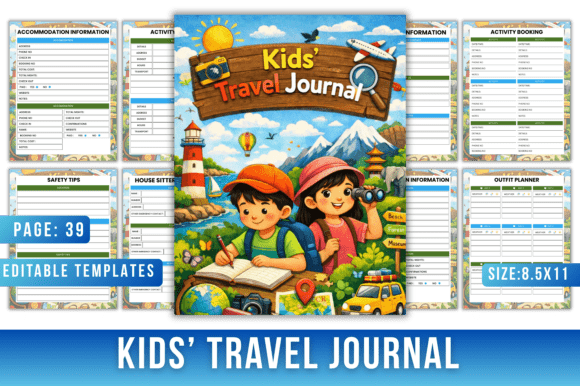
The Kids’ Travel Journal is built around seven key functional areas, each designed to support a different aspect of the travel experience. These features are not random—they follow the natural rhythm of planning, traveling, reflecting, and remembering.
Travel Overview Planning Section
Before the adventure begins, there is excitement in the preparation. The journal includes dedicated pages where children can outline destination details, set a budget, and jot down important travel reminders. This early stage builds anticipation and gives kids a sense of involvement. They can look at maps, research the capital city, and begin forming expectations. By writing down what they hope to see, they start the trip with intention rather than simply reacting to whatever comes next.
Daily Travel Journal Pages
Each day of the trip gets its own entry space. On page seven, kids will find room to record daily activities, describe the weather, highlight their favorite moment, and note what surprised them. These prompts guide children toward meaningful observation without feeling like a chore. A child might write about the breakfast pastry they loved in Paris or the lizard they spotted on a trail in Costa Rica. Over time, these pages become a time capsule of small joys that adults often forget.
Destination Country Information Pages
Turning travel into a learning experience happens naturally with the dedicated country info section on page five. Here, children can write about the capital city, the local language, the currency, and other interesting facts. This feature encourages research before departure or during the trip itself. It also helps kids connect abstract geography lessons to real-world places they have actually visited. A child who writes down that the yen is the currency of Japan will remember that detail far longer than one who reads it in a textbook.
Memory Reflection Pages
Reflection is where experience becomes wisdom. The memory pages give children space to think back on their trip as a whole. What did they learn? What was the funniest moment? What would they do differently next time? These questions prompt deeper thinking and help solidify the emotional impact of the journey. Reflection also nurtures gratitude. When a child writes about the kindness of a local guide or the beauty of a sunset, they are practicing appreciation in a tangible way.
Photo Spaces for Personal Touches
Pictures bring memories to life, and the journal includes dedicated photo spaces where kids can paste printed photos or draw their own scenes. This feature personalizes the journal and makes it more visually engaging. Children who might be reluctant to write long paragraphs often enjoy selecting which photos to include and captioning them. The combination of images and words creates a richer keepsake than either medium alone.
Packing Checklist Pages
Packing is a practical skill that even many adults struggle with. The Kids’ Travel Journal includes packing checklist pages (pages 26 through 30) that teach children how to organize their belongings before a trip. Kids can check off items as they pack, reducing the chance of forgotten essentials and giving them a sense of responsibility. Over multiple trips, children learn to plan ahead and anticipate what they will actually need versus what they simply want to bring.
Budget Expense Trackers
Money management is another life skill that travel naturally teaches. On pages 13 and 22, the journal provides simple budget tracking tools. Children can record what they spent on souvenirs, snacks, tickets, and other purchases. This feature introduces basic financial literacy in a low-pressure context. A child who tracks their spending over a week-long trip begins to understand trade-offs—maybe skipping one toy means they can afford a better souvenir later. These are lessons that stick.
Itinerary and Activity Planner
Pages 10 and 17 help children map out daily schedules, activities, and must-visit places. Planning an itinerary encourages decision-making and prioritization. Kids learn to balance must-see attractions with downtime, and they start to recognize their own travel preferences. Some children discover they love museums while others prefer outdoor adventures. The planner gives them a voice in how the day unfolds.
Fun Writing Idea Pages
Not every child knows what to write when faced with a blank page. The journal includes creative writing prompts that spark imagination. These prompts might ask children to describe their favorite meal in detail, write a postcard to a friend back home, or imagine what it would be like to live in the destination permanently. The writing pages transform journaling from an assignment into a playful activity.
Bucket List Goals
Finally, the bucket list pages invite children to dream big. They can list destinations they want to visit, experiences they hope to try, and goals they want to accomplish. This forward-looking feature keeps the excitement alive even between trips. A child who writes down a goal of visiting a particular national park or learning to snorkel has something to look forward to and work toward.
How the Journal Fits Into Modern Family Travel
Family travel today often involves screens. Tablets, phones, and in-flight entertainment keep children occupied, but they also create a passive experience. The Kids’ Travel Journal offers an analog alternative that promotes active engagement. It gives children a reason to look up from their devices and observe the world around them. During long train rides or quiet afternoons at a café, the journal provides a screen-free activity that still feels exciting.
The journal also works well alongside digital tools. A family might use a mapping app to navigate, then return to the journal to write about where they went. Parents can take photos on their phones and print them later for the photo spaces. The journal does not replace technology—it complements it by adding a layer of reflection that screens rarely encourage.
For homeschoolers or families who travel during school breaks, the journal doubles as an educational tool. Geography, history, math (through budgeting), and language arts all make appearances in the journal’s pages. Children practice writing, research, and critical thinking without ever feeling like they are doing schoolwork. The learning happens naturally because it is tied to real experiences.
Practical Benefits for Both Kids and Parents
Parents often worry about keeping children engaged during trips. A bored child can quickly derail even the best-planned vacation. The Kids’ Travel Journal gives children a job to do—they become the family chronicler. This role comes with a sense of purpose. When kids know they will be writing about the day’s events in the evening, they pay closer attention during the day. They look for interesting details, ask more questions, and remember more of what they experience.
The journal also reduces the mental load on parents. Instead of constantly reminding children to pay attention or remember something, parents can simply say, “You might want to write that down.” The journal becomes a gentle accountability tool that shifts responsibility to the child. Over time, children internalize the habit of observation and reflection without needing external prompting.
Another practical benefit is the preservation of details that adults often forget. Years after a trip, parents might struggle to recall which restaurant had the best pasta or what museum exhibit the kids loved most. The journal preserves those specifics in the child’s own words. When a family looks back at the journal together, they often discover that the children noticed things the adults missed entirely. Those discoveries become conversation starters and bonding moments.
Factors to Consider Before Choosing a Travel Journal for Your Child
Age and reading level matter when selecting a journal. The Kids’ Travel Journal is designed with prompts and spaces that work well for early elementary through middle school ages. Younger children may need help reading prompts or writing responses, while older children can work through the pages independently. Parents should consider whether their child enjoys writing, drawing, or a mix of both. The journal accommodates all three, making it versatile across different learning styles.
Trip duration is another factor. A weekend getaway might only fill a few pages, while a month-long trip could nearly complete the entire journal. The journal works well for either scenario because each section can be used selectively. Families who travel frequently may want to purchase multiple journals over time, turning each into a volume of a personal travel series.
Durability matters too. Travel journals get tossed into backpacks, stuffed into car seat pockets, and occasionally dropped on airport floors. The physical construction should hold up to real-world use. The Kids’ Travel Journal is designed with this in mind, offering a format that balances portability with enough space for meaningful entries.
Final Thoughts on Why This Journal Works
The Kids’ Travel Journal succeeds because it aligns with how children naturally experience travel. It does not force them to write essays or produce polished reports. It gives them a framework to capture the chaos, joy, and wonder of exploration in a way that feels personal and authentic. Each completed page becomes a souvenir that cannot be bought in a gift shop—a piece of the child’s own perspective preserved on paper.
In an age where experiences are often documented for social media rather than for personal reflection, this journal reclaims the act of remembering for its own sake. It teaches children that their memories matter, that their observations are worth recording, and that the world is full of details waiting to be noticed. For parents who want to raise curious, thoughtful, and engaged travelers, the Kids’ Travel Journal is more than a product—it is a tool for nurturing a lifelong love of discovery.