1000 Mental Therapy Prompts: A Practical Guide to Structured Self-Reflection
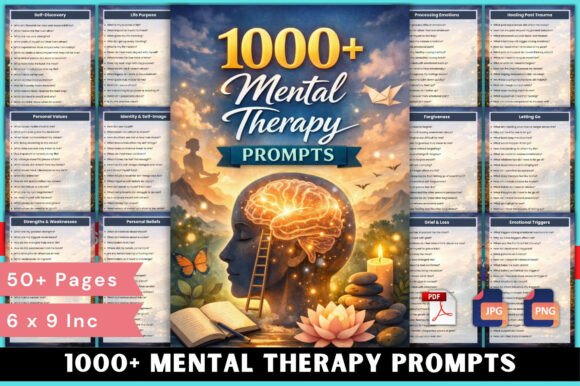
Journaling can feel aimless without direction. You sit down with a notebook, pen in hand, and stare at a blank page wondering where to even start. 1000 Mental Therapy Prompts removes that wall entirely by offering a carefully organized collection of questions and reflections designed around mental clarity, emotional balance, and personal growth. Unlike a random list of questions you might find online, this collection is built into meaningful thematic sections — from self-discovery and emotional awareness to healing past experiences and rebuilding your mindset. It treats reflection not as a one-time exercise but as a consistent practice that evolves with you.
How This Prompt Collection Fits Into Everyday Life
Most people who pick up a journaling tool like this aren't looking for a dramatic overnight change. They want something that fits into their existing routines without adding pressure. 1000 Mental Therapy Prompts works well as a morning anchor — a way to check in with yourself before the day pulls you in twenty directions. A single prompt can take anywhere from five to fifteen minutes, depending on how much you want to unpack. That flexibility makes it useful whether you have a full hour or just a quiet ten minutes with your coffee.
Evening use is equally common. After a long day, the brain often replays conversations, decisions, and moments that felt unresolved. A prompt that asks about emotional reactions or patterns can help you process those events without spiraling into overthinking. Instead of lying in bed replaying a tense conversation, you write it out, see it on paper, and gain a little distance from it. That shift alone makes evenings feel lighter and sleep comes more easily for many users.
People also turn to this collection during transitional periods. After a breakup, a job loss, a move to a new city, or any major life shift, the mind needs a structured way to make sense of what's happening. The themed sections — particularly those focused on healing trauma, mindset shifts, and personal values — offer a steady framework when everything else feels uncertain. You're not expected to know what to work on; the prompts guide you naturally toward the areas that need attention.
Different Users, Different Benefits
One of the surprising strengths of 1000 Mental Therapy Prompts is how differently it lands depending on who is using it. A student in their twenties might gravitate toward the self-discovery and emotional awareness sections, using the prompts to clarify what they actually want from relationships and career paths. Someone in their forties who has been through decades of accumulated stress might find the trauma and personal growth sections more resonant. The same prompt collection serves both users well, but it takes on completely different meaning depending on where they are in life.
For Those Navigating Life Transitions
Major transitions often come with a fog of uncertainty. You know something needs to change, but you're not sure what. The prompts aimed at personal values and mindset shifts help you identify what matters most right now — not what mattered five years ago or what society says should matter. A prompt might ask what you would prioritize if fear weren't a factor, or what a balanced version of your life would actually look like. Those questions cut through the noise quickly. Users in transition frequently report that a single prompt can clarify a decision they've been circling for months.
For Individuals Working Through Past Experiences
Healing isn't linear, and that can feel frustrating. The thematic sections focused on emotional awareness and healing trauma are designed to let you revisit difficult experiences at your own pace. Some prompts gently ask you to describe what you felt during a specific memory, while others invite you to reframe that memory through the lens of what you've learned since. This isn't about forcing painful emotions to the surface — it's about building enough safety in your own reflection to look at the past without being overwhelmed by it. Many users appreciate that they can skip certain prompts if they don't feel ready, returning to them weeks or months later when they have more emotional capacity.
For People Seeking Emotional Balance
Emotional balance doesn't mean feeling calm all the time. It means understanding why certain emotions spike and having a system to return to equilibrium. The emotional awareness section of 1000 Mental Therapy Prompts helps users track patterns they might otherwise miss. A prompt might ask what emotion showed up most frequently this week and what triggered it. Over time, users notice trends — perhaps they feel irritable when they haven't had alone time, or anxious when they've said yes to too many social obligations. Recognizing those patterns makes it easier to adjust before emotions escalate.
For Professionals and Creatives
Professionals dealing with burnout or creative block often need more than just a break — they need to unstick their thinking. Prompts focused on mindset shifts and personal growth challenge assumptions that keep people stuck. A creative might use a prompt that asks what story they're telling themselves about their abilities, then realize they've been operating under a limiting belief for years. A professional in a high-pressure job might use the self-discovery section to separate their work identity from their core identity, reducing the emotional toll of workplace stress. The collection doesn't treat these as separate problems; it treats them as layers of the same person.
Practical Examples From Real Use
Consider a prompt like "What is one belief you hold about yourself that you've never questioned?" On the surface, it seems simple. But when someone actually writes out their answer — maybe "I'm not good at asking for help" — they can then question whether that belief is true, where it came from, and whether it still serves them. Writing it down makes it concrete. Once it's concrete, it's possible to challenge it.
Another example: a prompt about emotional triggers might ask "When was the last time you reacted strongly to something small, and what might have been underneath that reaction?" This type of prompt doesn't just identify the trigger — it pushes you to explore the deeper layer. Maybe the small thing was a critical comment, and underneath it was a fear of being unworthy. Recognizing that link gives you more control the next time a similar situation arises. You still feel the initial sting, but you don't get carried away by it.
What to Consider Before Starting With Structured Prompts
Structured prompts work well, but they aren't a magical fix. Some users feel pressure to give "good" answers or complete every prompt in order. That approach can turn reflection into a chore. The collection works best when you treat it as a tool you control, not one that controls you. Skip prompts that don't resonate. Return to ones that feel heavy. Write a sentence or write two pages — there's no right length.
Another consideration is emotional readiness. Some of the prompts dig into uncomfortable territory. If you're currently in a period of acute distress, working through certain sections alone might feel overwhelming. That doesn't mean the prompts are harmful; it means pairing them with support — whether from a therapist or a trusted person — can make the experience more productive and less isolating. Many mental health professionals actually recommend structured prompts like these as a supplement to therapy because they help clients articulate what they want to bring to sessions.
Consistency matters more than intensity. Using 1000 Mental Therapy Prompts once a week for a year has a bigger aggregate effect than trying to answer twenty prompts in one sitting and then abandoning the practice for months. The collection is designed to be returned to, with prompts that reveal new layers each time you revisit them. A question you answered three months ago might receive an entirely different answer today, and seeing that shift is valuable in itself.
Strengths of this collection include its breadth and categorization. Having 1000 prompts means you never run out of material, and the thematic structure prevents the feeling of bouncing randomly between unrelated topics. A potential limitation is that some users prefer unstructured free-writing and feel constrained by any kind of prompt. If you find yourself fighting the questions, it might not be the right tool for your current season — and that's fine. A different approach might serve you better.
Observing the Impact Over Time
People who use structured prompts consistently often report subtle but meaningful changes. They notice that they pause before reacting emotionally, that they recognize when they're falling into old patterns, and that they feel less alone in their internal world. The act of writing regularly creates a kind of archive of your own mind — you can look back at entries from six months ago and see how far you've come. That tangible evidence of growth is one of the most motivating parts of the process.
The collection also tends to make conversations easier. When you've already reflected on your values, triggers, and goals, you can articulate them more clearly to partners, friends, or therapists. You stop saying "I don't know why I feel this way" and start saying "I noticed that when X happens, I tend to feel Y because of Z." That shift from confusion to clarity has a practical impact on how others can support you.
In the end, 1000 Mental Therapy Prompts offers structure without rigidity. It meets you where you are, whether you're exploring your identity for the first time or untangling decades of emotional history. The prompts don't demand perfection or instant insight — they ask only that you show up and write honestly. For many adults navigating the complexities of modern life, that simple act becomes a foundation for real, lasting change.