Grow My Faith: A Christian Prayer Reflection Journal
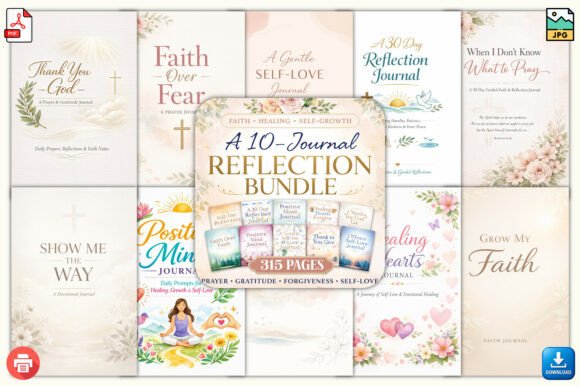
For believers seeking a structured yet flexible tool to deepen their walk with God, a well-designed journal can make all the difference. Grow My Faith is a Christian prayer and reflection journal built around intentional spiritual growth, offering guided pages for prayer, gratitude, scripture study, and personal reflection. It is not just another notebook—it is a thoughtfully crafted space where faith meets daily practice. Whether you are a publisher looking for resale-ready PLR content, a ministry leader equipping your congregation, or an individual longing for a more consistent devotional life, this journal delivers a clean, distraction-free format that supports genuine connection with God.
What Makes Grow My Faith Stand Out as a Prayer Journal
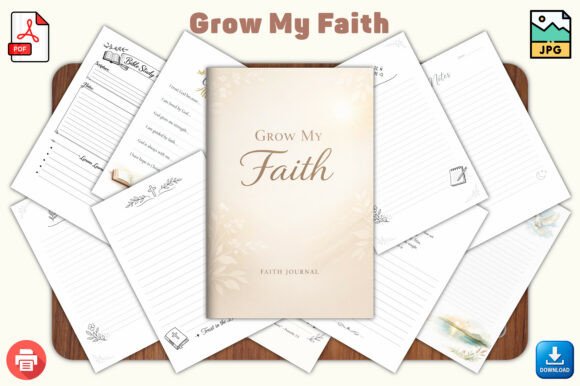
At first glance, the journal impresses with its minimal yet warm aesthetic. The 6 × 9 inch trim size feels substantial without being bulky—perfect for slipping into a bag or keeping on a nightstand. Each page uses a clean white background with an elegant, uncluttered layout that avoids visual noise. The typography is thoughtfully chosen: a readable serif font for scripture passages and reflective prompts, paired with a lighter sans serif font for instructions and structural elements. This combination creates a gentle visual hierarchy that guides the eye naturally from prayer prompts to gratitude lists to open-ended journaling space.
The design personality leans toward calm, reverent, and approachable. There are no heavy ornaments or distracting graphics—just subtle touches that reinforce the journal's purpose. The 30 beautifully designed interior pages include dedicated sections for daily prayer, scripture reflection, prayer requests, answered prayers, gratitude journaling, faith reflections, and blank notes pages. The guided prompts feel like a gentle hand on your shoulder, not a rigid checklist. This makes the journal equally suited for new believers developing a prayer habit and seasoned Christians looking to refresh their devotional rhythm.
Where the Journal Works Best Across Personal and Commercial Projects
Because of its versatile design and PLR-ready format, Grow My Faith fits into multiple contexts. For personal Christian journaling, it serves as a daily companion that encourages consistency without feeling like homework. The guided structure helps users move beyond surface-level prayers into deeper reflection, while the free-writing pages allow for spontaneous spiritual insights. Individuals can use it as a prayer devotional routine, tracking how God moves in their life over weeks and months.
For churches and ministry resources, the journal can be branded and distributed to small groups, new members, or as part of a discipleship curriculum. Its clean layout makes it easy to customize with a church logo or additional teaching notes. Ministers and group leaders will appreciate that the journal does not require a specific theological framework—it works across denominations and traditions, focusing on foundational practices like prayer, gratitude, and scripture reflection.
KDP low-content book publishers and Etsy sellers will find the JPG PDF format with 300 DPI print-ready resolution straightforward to upload and sell. The 6 × 9 inch size is a standard KDP trim, and the white background ensures clean printing on both home printers and commercial presses. The PLR license allows for resale with minimal editing, making this a time-efficient product for creators who want to offer quality faith-based content without designing from scratch. Entrepreneurs and marketers in the Christian niche can bundle the journal with other devotional products or offer it as a lead magnet to build their email list.
Beyond personal and small-business use, the journal also works well for faith-based coaching programs, retreat giveaways, and nonprofit fundraising. Its universal design language means it will not look dated in a few years, giving it lasting value as a reproducible resource.
How Design Influences Readability, Reflection, and Spiritual Engagement
The effectiveness of a prayer journal depends heavily on its readability and visual hierarchy. A cluttered or overly decorative layout can distract from the reflective experience, while a sparse design may feel cold and uninviting. Grow My Faith strikes a careful balance. The elegant layout uses generous white space to let each section breathe, which is especially important for the faith reflections free writing space. When a user opens the journal, they are not confronted with walls of text or competing design elements—they see a clear path from prompt to prayer.
The typography pairings play a key role here. The serif headings and scripture references evoke a sense of tradition and reverence, while the sans serif body text feels modern and approachable. This contrast subtly communicates that the journal honors ancient practices while being designed for today's believer. The font pairing also aids comprehension: prompts and questions are visually distinct from the user's own handwriting, reducing cognitive load during prayer time. Over weeks of use, this consistency builds a familiar rhythm that makes returning to the journal feel natural rather than forced.
Brand perception is another factor. For publishers and ministries, the journal's polished appearance signals professionalism and care. A buyer who sees the high-quality interior pages and thoughtful layout is more likely to trust that the content was created with spiritual depth in mind. This matters for commercial licensing and resale—customers are not just buying paper; they are investing in a tool that supports their faith journey. The journal's design, therefore, directly influences audience engagement. When the physical artifact feels good to hold and use, the spiritual practice it facilitates becomes more consistent.
Practical Guidance for Choosing and Using Grow My Faith
If you are evaluating whether Grow My Faith is the right fit for your project or personal use, consider a few practical factors. First, assess your project fit. For individual devotional use, the 30-page count offers a manageable commitment—enough to build a habit without feeling overwhelming. If you need a longer journal for a full quarterly devotional, you can easily expand the interior pages using the existing design template, since the PLR format allows editing. The clean layout makes it simple to add or remove sections without breaking the visual flow.
For commercial licensing, verify that the terms match your intended use. The package includes high-quality JPG PDF formats that are ready for both digital distribution and print. The 300 DPI resolution ensures crisp output at the 6 × 9 inch size, and the white background minimizes ink usage during printing. If you plan to sell the journal on Etsy or Amazon KDP, test a sample print first to confirm color accuracy and binding margins. The elegant layout holds up well in both spiral-bound and perfect-bound formats.
When testing font pairings for your own branded version, stick with the existing serif/sans serif combination or choose alternatives with similar contrast. A heavy script or decorative display font might compete with the journal's quiet tone. The goal is readability first, then personality. If you are adding your own prompts or scripture verses, keep the line length short (50–70 characters) and maintain generous leading to accommodate handwriting. The blank journal pages at the end are especially valuable for users who want to extend their reflections beyond the guided sections—do not crowd them with extra design elements.
For brand identity considerations, the journal's minimal aesthetic pairs well with a wide range of visual styles. Whether your ministry or brand uses warm earth tones, cool blues, or black-and-white photography, the interior design will adapt without clashing. This makes it a flexible design asset for content creators who serve multiple audiences. If you are a blogger or social media manager, consider using the journal as a visual prop in posts about prayer or spiritual habits. The clean pages photograph well and reinforce a message of intentional faith.
Real-World Value for Designers, Publishers, and Faith Communities
What sets Grow My Faith apart from generic journals is its specificity. The guided sections are not vague prompts—they are rooted in Christian spiritual disciplines. The scripture reflection Bible study sections encourage users to read, write, and apply God's Word. The prayer requests and answered prayers pages build a record of God's faithfulness over time. The gratitude journaling pages shift focus from problems to provision. These are not just design features; they are spiritual tools embedded in the journal's structure.
For publishers, the PLR license removes a significant barrier to entry. You do not need graphic design skills or expensive software to launch a faith-based product. The included files are ready to upload and sell, and the easy to edit and resell format means you can customize them for different market segments—perhaps a version for women's ministry, another for youth groups, and a third for grief support. Each variant can use the same core design with minor adjustments to prompts and cover art.
Entrepreneurs and marketers will appreciate the journal's potential as a lead magnet or tripwire. A low-cost or free PDF version of the first few pages can attract subscribers interested in Christian living, while the full print version becomes a premium offer. The modern typography and consistent layout reinforce a professional brand image, which builds trust with an audience that may be skeptical of low-quality freebies.
For hobbyists and crafters, the journal can be personalized as a gift for friends, family, or small group members. Adding a handwritten note on the first page or decorating the margins with simple illustrations turns a print-ready product into a meaningful present. The 6 × 9 inch size also fits nicely into standard scrapbook formats if you want to create a keepsake version.
Ultimately, Grow My Faith succeeds because it respects both the user's time and their spiritual journey. It does not promise instant growth or formulaic prayers. Instead, it provides a container for the slow, steady work of faith—the daily turning toward God, the habit of gratitude, the discipline of reflection. That is a rare combination in a market flooded with either overly simplistic notebooks or heavily designed products that distract from their purpose. If you are looking for a resource that balances beauty with function, and tradition with modern usability, this journal offers a solid foundation for building a deeper prayer life, one page at a time.