The Growth Grief Journal: A Guided Path Through Loss and Healing
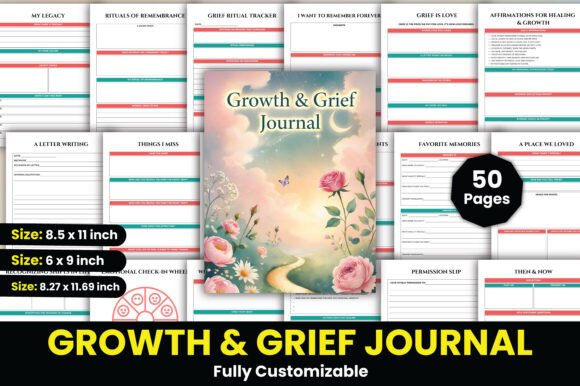
Grief is not a linear process. It does not follow a neat timeline or adhere to predictable stages. For many, the experience of loss arrives in waves—sometimes gentle, sometimes overwhelming—and leaves behind a terrain that must be navigated with patience, compassion, and deliberate reflection. A Growth Grief Journal offers a structured yet flexible way to move through this terrain, transforming raw emotion into meaningful insight. Unlike a blank notebook that leaves you staring at an empty page, this guided resource provides prompts, trackers, and reflective exercises that support genuine healing. The editable Growth Grief Journal Interior allows anyone to customize their journey using a free Canva account, making it accessible for professionals, creators, educators, and individuals alike. The result is a deeply personal artifact of resilience that grows with you.
What Makes the Growth Grief Journal Distinct
At its core, the Growth Grief Journal is built around the understanding that grief and growth coexist. This journal does not ask you to move past your loss or to find a silver lining. Instead, it invites you to hold grief and love together, to recognize that the depth of your sorrow reflects the depth of your connection. The interior includes a range of thoughtfully designed sections that address the full spectrum of the grieving experience—from the rawest pain to the quiet moments of recalibration.
The editable version provides a high-quality PDF, JPEG, and PNG files that you can modify using a free Canva account. This means you are not locked into a rigid layout. You can adjust colors, rearrange sections, add your own prompts, or incorporate personal photographs. The flexibility makes it suitable for therapists who want to tailor a resource for clients, for educators designing curriculum around emotional well-being, for hobbyists creating a keepsake, or for business owners who offer grief support products. The ability to edit ensures that the journal matches your unique voice and needs.
Exploring the Interior Components
The Growth Grief Journal Interior is not a random collection of pages. Every section serves a specific purpose in the healing process. The book begins with a simple ownership page—This Book Belongs To—establishing the journal as a private, safe space. From there, the content unfolds in a sequence that mirrors the natural rhythm of grief work: acknowledging, feeling, reflecting, and rebuilding.
Affirmations for Healing Growth
Affirmations are not about pretending everything is fine. In this journal, affirmations for healing growth are crafted to validate your experience while gently steering you toward self-compassion. You might encounter statements like “My grief is evidence of my love” or “I am allowed to heal at my own pace.” These are not empty platitudes; they are anchors that you can return to when the weight of loss feels unbearable. The editable format lets you write your own affirmations or adjust existing ones to match your personal beliefs.
My Grief Story
This section provides space to narrate your experience in your own words. Unlike a clinical intake form, this prompt encourages storytelling. You can describe the person or situation you lost, the circumstances, and how your life has shifted. Writing your grief story is a powerful act of meaning-making, and having a dedicated space within the journal reinforces that your story matters.
Recognizing Shifts in Life
Loss changes everything. Your daily routines, relationships, priorities, and even your sense of self are often reshaped. This prompt asks you to observe those shifts without judgment. Are you sleeping differently? Do certain places feel different? Have your values evolved? By naming these changes, you reclaim a sense of agency over your life.
Emotional Check-In Wheel
The Emotional Check-In Wheel is a visual tool that helps you identify the specific emotions you are feeling. Rather than a vague “I feel sad,” the wheel breaks down emotions into nuanced categories—grief, anger, relief, guilt, numbness, hope, and more. You can mark which emotions are present and note their intensity. Over time, this creates a map of your emotional landscape.
Where I Feel Grief in My Body
Grief is not just an emotional experience; it lives in the body. This section includes a body outline where you can shade or mark areas of physical tension, pain, or discomfort. Many people report carrying grief in their chest, shoulders, or stomach. By externalizing these sensations, you can begin to address them with grounding exercises, movement, or rest.
Growth Through Loss
Post-traumatic growth is a well-documented phenomenon where individuals emerge from adversity with greater resilience, deeper relationships, or a renewed sense of purpose. The Growth Through Loss section provides prompts that explore these possibilities without minimizing pain. You might ask yourself: “What have I learned about my own strength?” or “In what ways has my perspective on life changed?”
Permission Slip
One of the most liberating pages in the journal is the Permission Slip. This is a space where you grant yourself explicit permission to feel what you feel, to take breaks, to say no to social obligations, or to seek joy. Writing it down makes it real. You can revisit this slip whenever guilt or pressure arises.
Then Now
The Then Now section is a side-by-side comparison of your life before and after loss. It is not about ranking which version is better; it is about acknowledging that both versions exist. You might compare your coping strategies, your support systems, or your daily routines. This exercise fosters self-awareness and acceptance.
Letter Writing
Writing a letter to the person you lost, to yourself, or even to grief itself can unlock emotions that are hard to express verbally. The journal includes guided letter-writing prompts with space for your words. You can choose to seal the letter, keep it in the journal, or burn it as a ritual. The editable version allows you to add additional letter pages as needed.
Things I Miss and Things I’m Learning
These two facing pages work in tandem. On one side, you list the tangible and intangible things you miss—the sound of someone’s laugh, a shared ritual, the feeling of safety. On the other side, you list what you are learning about yourself, about life, and about healing. This duality honors both the pain and the growth.
Capture the Moments and Favorite Memories
Memory-keeping is an essential part of grief work. These sections provide prompts to record specific moments, sensory details, and stories that you want to preserve. Favorite Memories might include a trip you took, a conversation that changed you, or a quiet afternoon that now feels sacred. By capturing these, you build a legacy of love.
A Place We Loved and My Legacy
Places hold emotional resonance. A Place We Loved invites you to describe a location that was meaningful to you and the person you lost. This could be a park bench, a kitchen table, or a hiking trail. My Legacy shifts the focus to what you want to carry forward—values, traditions, or ways of being that honor what you have lost.
Rituals of Remembrance and Grief Ritual Tracker
Rituals provide structure in chaos. The Rituals of Remembrance page suggests ideas for honoring anniversaries, birthdays, or ordinary days. The Grief Ritual Tracker is a log where you can record which rituals you performed and how they affected you. Over time, you will see patterns and discover what truly nourishes you.
I Want to Remember Forever and The Hardest Days
These two sections hold space for the most intense emotions. I Want to Remember Forever is for the details you never want to fade—the sound of a voice, the warmth of a hug, a specific piece of advice. The Hardest Days is where you can anticipate or reflect on dates that are particularly painful, such as the anniversary of a death, a birthday, or a holiday. Pre-planning for these days can reduce their overwhelm.
Tracking Growth Over Time
The journal includes a robust suite of trackers that help you monitor your progress without pressuring you to be okay. The Monthly Growth pages let you review what you have learned, what challenged you, and what helped you feel grounded. My Journey and My Goals shift the focus forward, encouraging you to set intentions that align with your healing—not as a way to escape grief, but as a way to live fully alongside it.
The Weekly Growth Planner and Daily Planner are practical tools for managing day-to-day life. Grief can make executive function difficult, so having a simple structure for tasks, meals, and appointments can reduce cognitive load. The Weekly Reflection page invites you to look back on what worked and what didn’t, fostering a gentle cycle of improvement.
The Grief Habit Tracker and Rewards system acknowledges that even small actions—taking a shower, going for a walk, calling a friend—are victories. You can track habits that support your well-being and reward yourself with small treats or activities. This gamifies self-care in a way that feels encouraging, not trivializing.
Practical Daily Tools
Beyond the emotional and reflective pages, the Growth Grief Journal includes practical sections that integrate healing into everyday life. The Grocery List may seem mundane, but when grief makes even basic tasks feel monumental, having a dedicated space for mundane planning is a form of self-compassion. The Sunlight Tracker and Mood Tracker help you observe patterns between your environment and your emotional state. Many people notice that more sunlight correlates with better mood, and tracking this data reinforces the importance of spending time outdoors.
The Daily Nature Reflection is a simple prompt to note what you observed in the natural world—a bird, a cloud formation, a change in temperature. This practice grounds you in the present moment and reminds you that life continues around you. The Grounding Exercise Log provides space to record techniques like deep breathing, progressive muscle relaxation, or the 5-4-3-2-1 sensory exercise. Consistent grounding reduces anxiety and helps you regulate your nervous system.
Long-Term Planning and Reflection
The SMART Goals section encourages you to set Specific, Measurable, Achievable, Relevant, and Time-bound goals related to your healing. This is not about achievement; it is about giving yourself direction when life feels aimless. The Seasonal Bucket List offers ideas for activities that align with each season—planting flowers in spring, making soup in fall—helping you engage with the world around you.
The Annual Overview provides a bird’s-eye view of your year. You can mark important dates, track major themes, and reflect on how you have changed. The Chore Chart is another practical tool that prevents household tasks from piling up when you lack energy. Delegation and simplification are key aspects of grief management.
Boundaries and Brave Steps
Two of the most empowering sections are Boundaries Protection and Brave Steps Tracker. Boundaries Protection prompts you to identify relationships or situations that drain you and to set clear limits. This might mean saying no to certain gatherings, limiting time with unsupportive people, or protecting your rest. The Brave Steps Tracker is a log of small courageous actions—speaking about your loss, asking for help, trying a new activity. Each brave step builds momentum toward a life that includes both grief and joy.
Customization and Practical Use
The editable Growth Grief Journal Interior is designed for ease of use. Because it is compatible with a free Canva account, you can change fonts, colors, and layouts without any design experience. The high-quality PDF, JPEG, and PNG files ensure that whether you print at home, use a professional printing service, or share digitally, the result will be crisp and beautiful. Therapists can brand the journal with their practice logo; educators can adapt the language for different age groups; individuals can add extra pages or remove sections that do not resonate.
For those who prefer a physical journal, simply edit the files in Canva and export as PDF for printing. For digital users, the PNG files can be used in note-taking apps like GoodNotes or Notability. This versatility makes the Growth Grief Journal a valuable resource for a wide audience.
Considerations for Choosing This Journal
While the Growth Grief Journal is comprehensive, it is important to recognize that no journal can replace professional mental health support. It works best as a complementary tool, used alongside therapy, support groups, or medical care. Some sections may be triggering for those in acute grief; it is okay to skip pages or take breaks. The editable format allows you to remove or modify any content that does not serve you.
The journal is also available in multiple formats, so you can choose digital, printable, or a combination. The file sizes are optimized for easy download and sharing. Customer support is available for any editing questions, ensuring that you can make full use of the product regardless of your technical skill level.
Final Thoughts on the Growth Grief Journal
A Growth Grief Journal is more than a collection of prompts and trackers. It is a companion that walks with you through the valley of loss, helping you find language for what feels unspeakable and structure for what feels chaotic. The editable Growth Grief Journal Interior ensures that this companion fits your unique circumstances, culture, and preferences. Whether you are a therapist supporting clients, a person navigating personal loss, an educator fostering emotional literacy, or a creator looking for meaningful content, this journal offers a framework that respects both the weight of grief and the possibility of growth. Healing is not about forgetting; it is about learning to carry love and loss together. This journal helps you do exactly that.